
Perspective
What Is Gimbalabs?
By Harsha Gullapalli
Gimbalabs started as a place to learn Cardano by building.
Years later, the harder question is no longer just how do we help people learn?
It is:
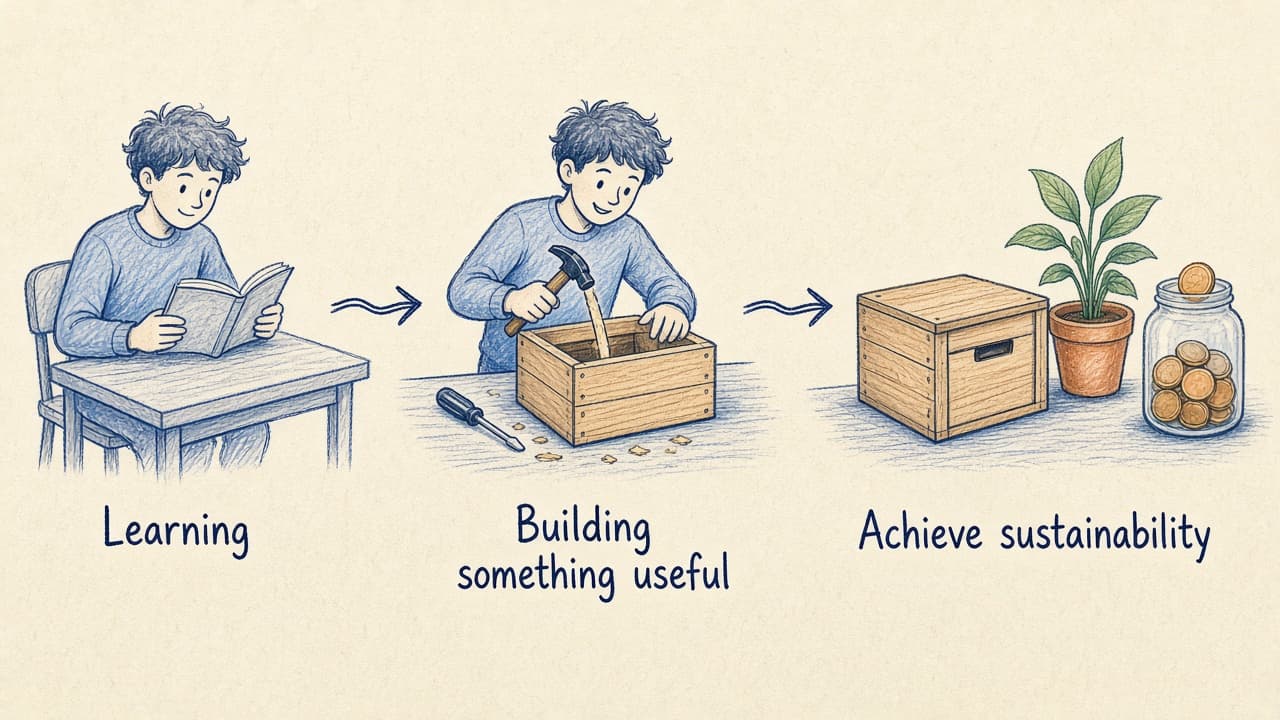
How do we help people move from learning, to building something useful, to making that work sustainable?
And if we discover approaches that work, can we make them reusable for other communities and ecosystems?
That is increasingly how I think about Gimbalabs.
From Learning to Experimentation
Gimbalabs began as a Cardano education initiative built around learning through participation.
Instead of only teaching concepts, people could work on projects, explore tools, solve problems, and learn alongside others.
But building creates new problems.
A person can learn a technology without knowing what to build.
A team can build something without knowing whether anyone needs it.
A project can receive funding without knowing how it survives when the funding ends.
A community can introduce governance without knowing how to actually make decisions together.
So Gimbalabs gradually became a place not just for learning, but for experimenting with these problems in practice.
Today those experiments can take different forms:
- educational programs;
- open-source projects;
- hackathons;
- governance systems;
- community initiatives;
- technical tools;
- sustainability experiments;
- and potentially products or services.
The point is not that every experiment succeeds.
The point is that we learn something useful from doing it.
The Experiment Should Produce Evidence
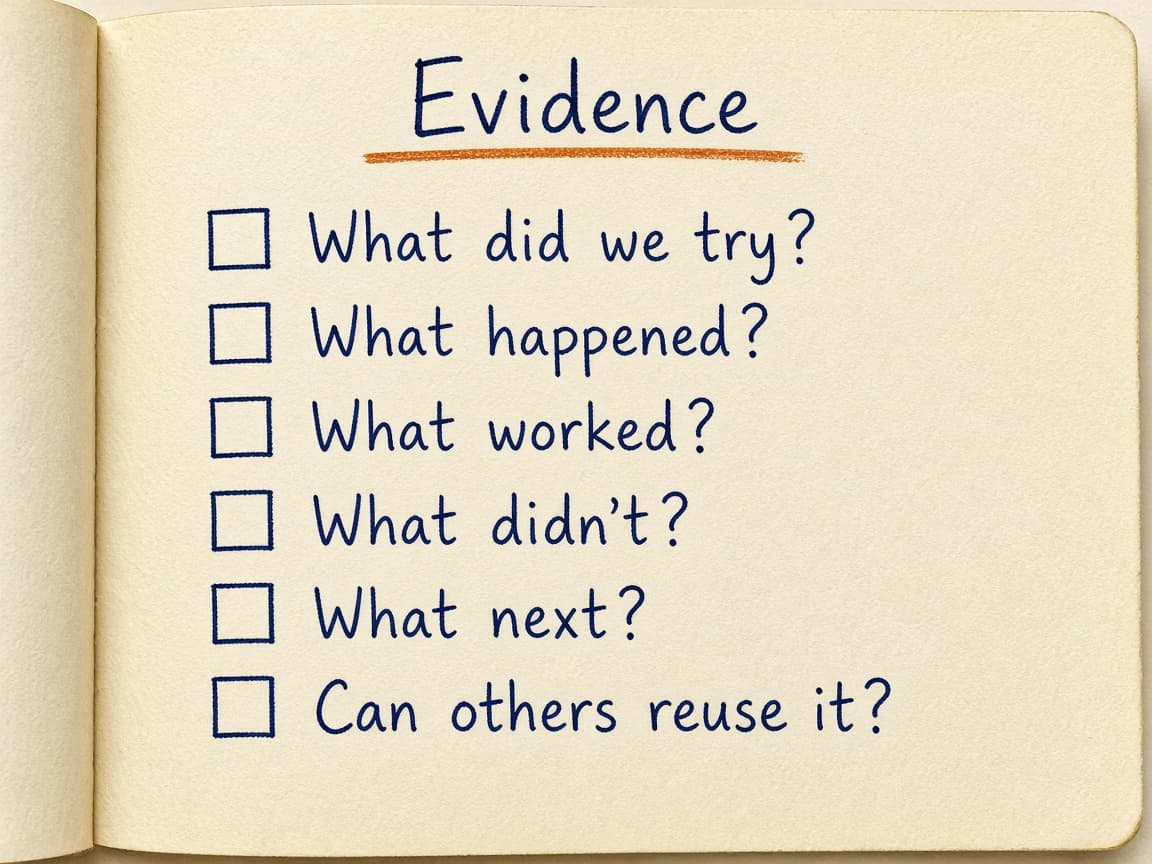
I think a useful Gimbalabs experiment should eventually let us answer a few basic questions:
What did we try?
What happened?
What worked?
What didn't?
What would we change next time?
Can somebody else use what we learned?
If an experiment works, it might become a repeatable program, process, tool, or implementation.
If it fails, it can still be valuable if we understand why.
We don't want to simply run activities and move on.
We want to accumulate knowledge.
Sustainability Is the Hard Part
This is the problem I am most interested in right now.
There are many ways to help people start projects.
Grants can fund them.
Hackathons can launch them.
Education programs can teach them.
Communities can support them.
But what happens six months later?
Can the project continue?
Can the people doing the work support themselves?
Is somebody willing to pay for the value being created?
Can the project survive without continuously finding another grant?
I think Gimbalabs can become a place where we deliberately experiment with that transition:
learning → building → usefulness → sustainability
Not every project needs to become a traditional company.
Some may survive through services.
Some through products.
Some through sponsorships, grants, open-source funding, ecosystem support, or combinations of these.
We don't need to decide the answer in advance.
We can test different approaches and document what happens.
A Home for Experiments
This leads to the larger idea.
I increasingly see Gimbalabs as a home for experiments.
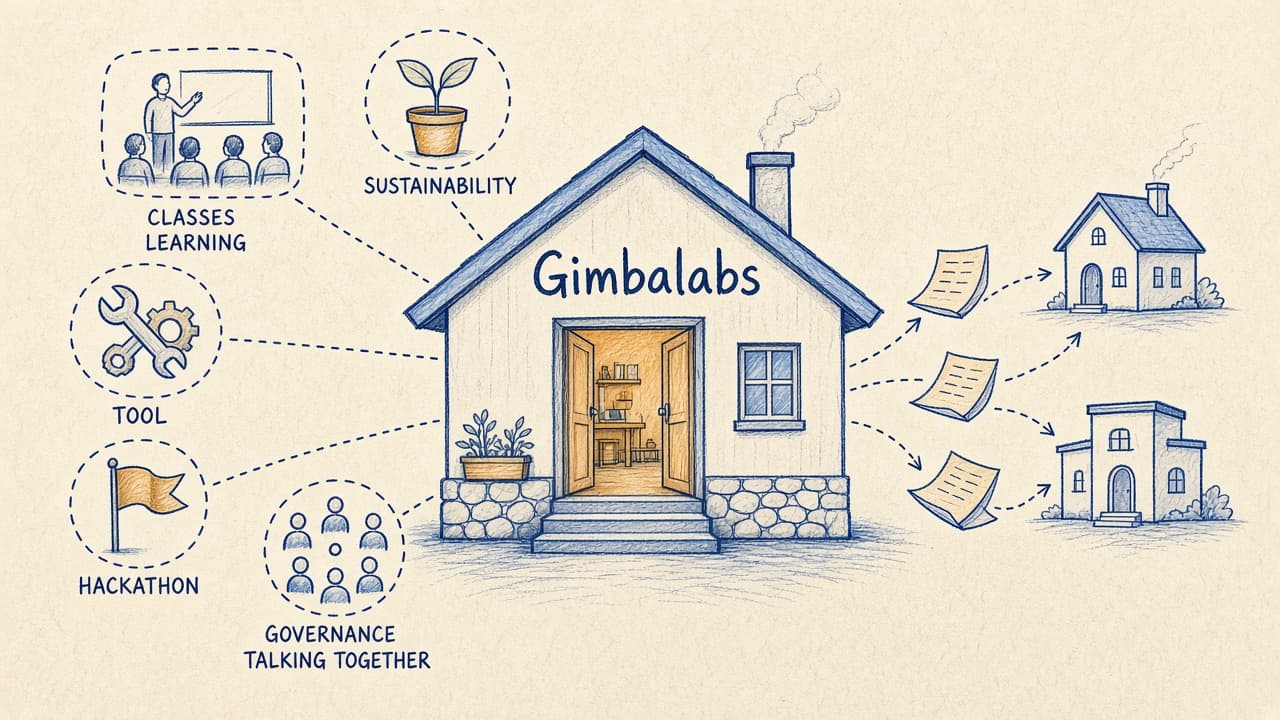
One experiment might help people learn.
Another might help early projects find users.
Another might test a governance process.
Another might create open-source infrastructure.
Another might discover a program that an ecosystem or foundation wants to run elsewhere.
Some experiments may fail.
Some may create public knowledge.
Some may eventually generate revenue.
Taken together, they create something more valuable: a growing body of tested approaches.
Over time, Gimbalabs could be able to say:
We tried this. Here is what happened. Here is the evidence. Here is what we learned. If it is useful to you, build on it.
That is much more interesting to me than pretending we already know the answers.
Why This Could Matter Beyond Cardano
Gimbalabs is rooted in Cardano.
But the problems we are exploring are not uniquely Cardano problems.
Other ecosystems, foundations, communities, and institutions are also trying to figure out:
How do we create effective learning environments?
How do we turn learners into builders?
How do we help early projects become useful?
How do we help useful work survive?
How do we fund experimentation without funding endless activity?
How do we capture what we learn so others don't need to start from zero?
Cardano can be where we run many of these experiments.
The knowledge does not have to stay there.
So, What Is Gimbalabs?
My answer today would be:
Gimbalabs is a place where people learn by building, experiment with difficult ecosystem problems, and turn what we learn into knowledge, tools, processes, and programs that others can reuse.
And increasingly, I think sustainability should sit at the center of that work.
But this is my perspective.
Gimbalabs has been shaped by many people over several years, and I don't want one person's interpretation to become the definitive version of its story.
I would especially like Newman, Seb, James, and other long-term contributors to add their own perspectives.
Where do we agree?
Where do we disagree?
What parts of Gimbalabs am I missing?
What should it become?
I think those different perspectives are worth documenting too.
Because Gimbalabs itself is still an experiment.
And that is probably how it should be.